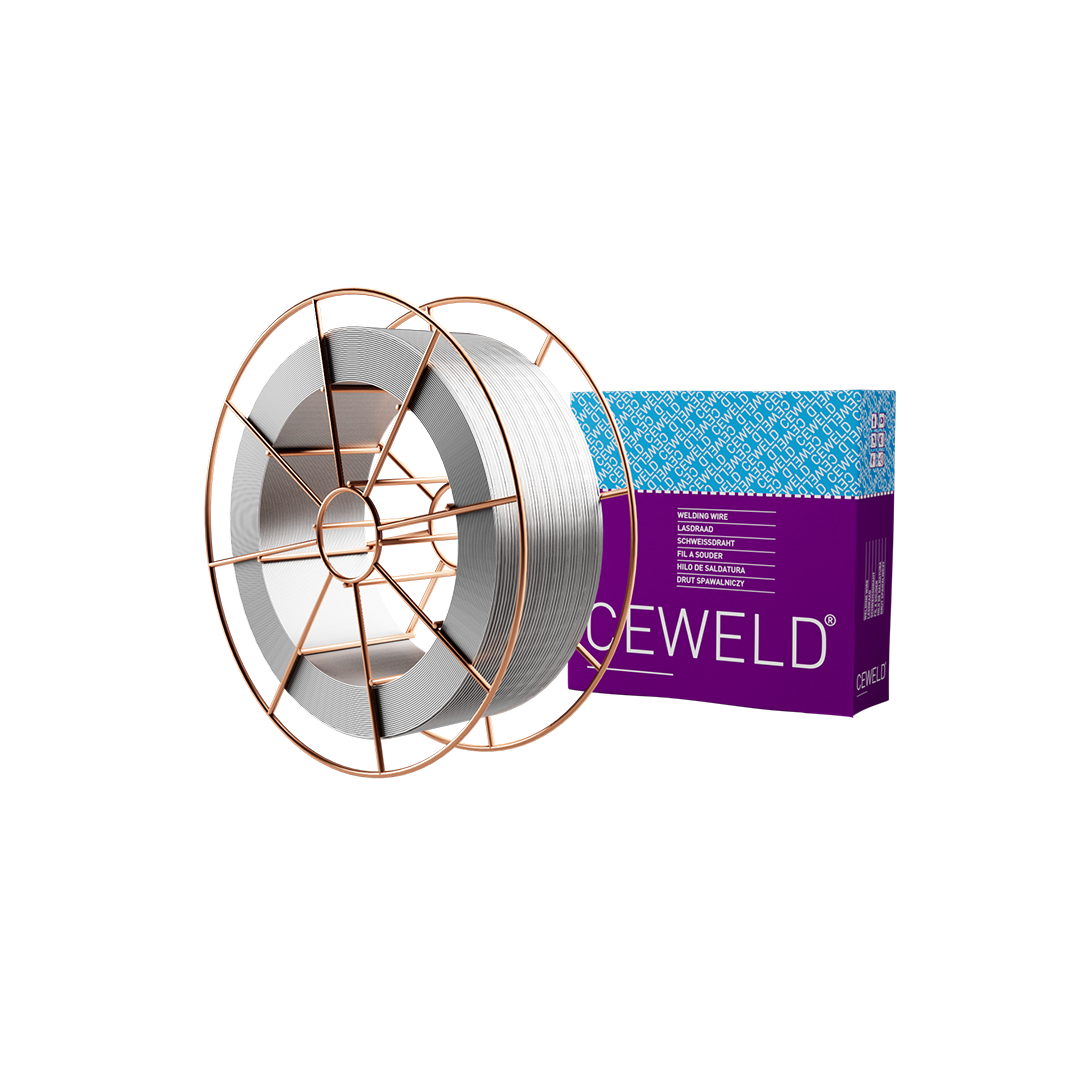
- spécifications du produit
- conditionnement
- demander un devis
Due to the high resistance to cracking and toughness, all weld metal requires no buffer layer. Suited for wear parts subject to heavy impact and shock. The interpass temperature should be maximum 250ºC. The weld metal is machinable with carbide tip tools, hardening is possible. The maximum hardness is dependent on the base metal and is usualy already achieved in the first layer.
140°C / 24 hr
320-390 HB, hardfacing and rebuilding alloy for wornout wheels, rails, tracks, tires, conveyors, crossings, bufferlayers prior to hardfacing. Excelent wear and abrasion resistance against heavy impact and shock, good machinable with carbide tools
320-390 HB, hardfacing and rebuilding alloy for wornout wheels, rails, tracks, tires, conveyors, crossings, bufferlayers prior to hardfacing. Excelent wear and abrasion resistance against heavy impact and shock, good machinable with carbide tools
Due to the high resistance to cracking and toughness, all weld metal requires no buffer layer. Suited for wear parts subject to heavy impact and shock. The interpass temperature should be maximum 250ºC. The weld metal is machinable with carbide tip tools, hardening is possible. The maximum hardness is dependent on the base metal and is usualy already achieved in the first layer.
Rails repair, crossings, concrete bars, crane, railway and tram tracks, conveyors and transport surfaces, tires, bucket and loader teeth, cruscher jaws, bufferlayers etc.


| Heat Treatment |
RP0,2 (MPa) |
Rm (MPa) |
A5 (%) |
Hardness |
|---|---|---|---|---|
| As Welded | 350 HB |